Workholding Systems for Accurate Manufacturing
Modern manufacturing requires precision, consistency, and efficiency. Machines can cut and shape materials with incredible accuracy, but they still depend on proper workholding and tooling components to perform reliably.
Manufacturers use workholding systems to secure parts and guide tools during machining operations. These systems often combine clamping components, drill bushings, and alignment tooling to create stable and repeatable production processes.
Reliable solutions from company like All American Bushing help manufacturers improve accuracy and maintain consistent production quality across many industries.
This article explains what workholding system is, how toggle clamps and drill bushings function in manufacturing systems, and why combining these tooling components improves overall production performance.
What Is Workholding in Manufacturing?
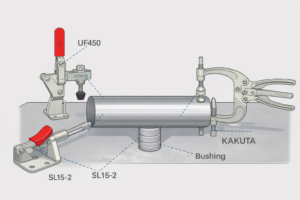
Workholding refers to the methods and devices used to secure and position a workpiece during manufacturing operations. Proper workholding ensures that the part remains stable while machines cut, drill, weld, or assemble it.
Without reliable workholding, a part may move or shift during production. As a result, this movement can cause inaccurate cuts, misaligned holes, or damaged components.
Manufacturers therefore use CNC workholding solutions to hold parts firmly in place while guiding cutting tools with precision. Workholding systems often include:
-
clamps
-
drill bushings
-
locating pins
-
fixture plates
-
alignment components
Together, these elements create a controlled environment for machining and production processes.
Manufacturers often follow industry standards established by organizations such as the American National Standards Institute to maintain consistent quality and machining accuracy.
The Role of Toggle Clamps in Workholding
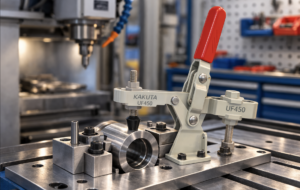
One of the most common clamping devices used in manufacturing fixtures is the Toggl Clamps.
Toggle clamps secure a workpiece by applying pressure through a mechanical linkage system. When the operator moves the handle into position, the mechanism locks into place and holds the part firmly.
Because of this design, toggle clamps provide fast and repeatable clamping in production environments.
Manufacturers use toggle clamps for many applications, including:
-
CNC machining fixtures
-
welding setups
-
assembly stations
-
inspection fixtures
High-quality clamping solutions from Kakuta helps manufacturers maintain stable workholding conditions during repeated production cycles.
As a result, toggle clamps play an important role in fixture clamping systems that support precision manufacturing.
The Role of Drill Bushings in Tool Guidance
While clamps secure the workpiece, drill bushings guide the cutting tool.
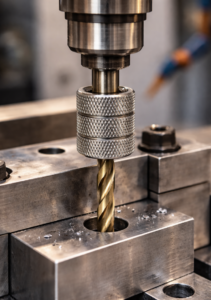
A Drill Bushing is a hardened sleeve installed inside a jig or fixture. The cutting tool passes through the bushing before contacting the workpiece. This sleeve keeps the drill aligned and ensures the tool enters the material at the correct position.
Because of this guidance, drill bushings help manufacturers achieve consistent hole placement and precise drilling operations.
Industries often rely on drill bushings in:
-
jig and fixture systems
-
CNC drilling operations
-
production drilling stations
-
precision machining environments
Suppliers such as All American Bushing provide precision-engineered bushings designed for durability and accuracy in demanding industrial environments.
As a result, drill bushings remain essential tooling components for manufacturing systems that require repeatable drilling accuracy.
Combining Clamping and Tool Guidance in Fixtures
In many manufacturing environments, fixtures combine multiple tooling components to create efficient production systems.
A typical fixture may include:
-
toggle clamps to secure the workpiece
-
drill bushings to guide cutting tools
-
locating pins or alignment tooling to position the part correctly
Together, these components form an integrated industrial workholding system.
First, locating components position the part. Next, clamps secure the workpiece in place. Finally, drill bushings guide the cutting tool to create precise holes or features.
Because each component performs a specific function, the entire system works together to improve production accuracy.
Benefits of Effective Workholding Systems
Manufacturers invest in reliable workholding systems because they provide several important production benefits.
Improved Precision
Secure clamping and accurate tool guidance help maintain tight machining tolerances. As a result, manufacturers produce parts that meet design specifications more consistently.
Reduced Production Errors
When parts remain stable during machining, the risk of misalignment or tool deviation decreases. Consequently, manufacturers reduce scrap and rework.
Faster Production Cycles
Quick-action clamping solutions allow operators to secure and release parts efficiently. This improvement helps reduce setup time and increase overall productivity.
Greater Manufacturing Consistency
Reliable workholding tools ensure that each production cycle follows the same process. Therefore, manufacturers maintain consistent quality across large production runs.
Conclusion
Workholding systems play a critical role in modern manufacturing. By combining clamping devices, drill bushings, and alignment components, manufacturers create stable environments for machining and assembly operations.
Toggle clamps from Kakuta help secure workpieces during production, while precision drill bushings from All American guide cutting tools to maintain drilling accuracy.
Together, these industrial workholding tools help manufacturers improve precision, increase efficiency, and maintain consistent product quality in demanding production environments.